
September 1, 2026
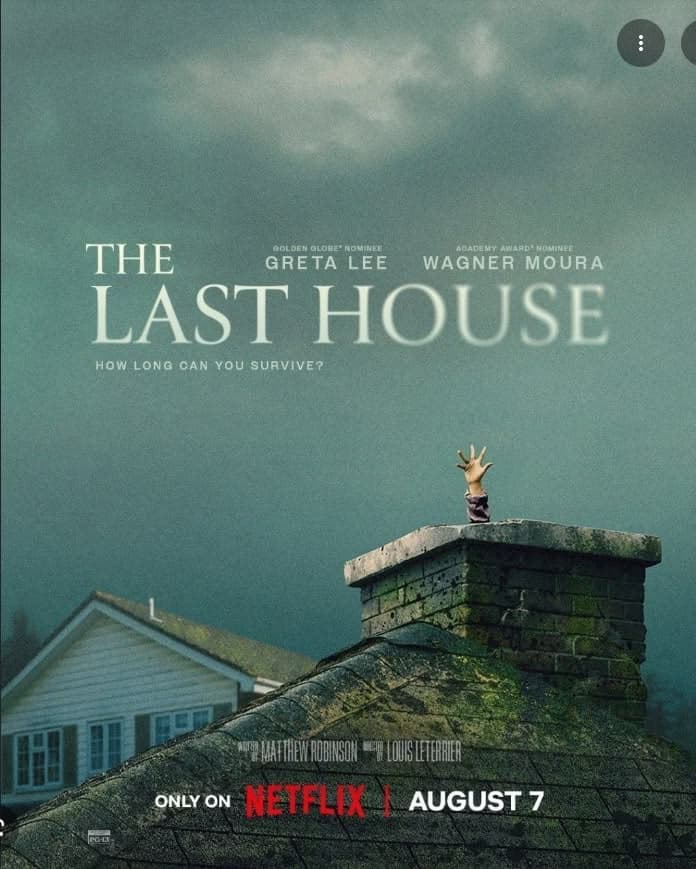
The Last House (2026): A Great Premise Trapped Inside a Confused Script
The Last House (2026): A Great Premise Trapped Inside a Confused Script
I went into The Last House expecting a tight, contained thriller about a family stuck in their home for a few tense days. What I got instead was a five-year survival saga that starts as a lockdown allegory, turns into a creature feature, and ends as something closer to a fable about mercy. Ambitious? Absolutely. Successful? That's where things get messy.
The Setup
Directed by Louis Leterrier (Now You See Me, Fast X) and written by Matthew Robinson, the film centers on the Delgado family. Jason (Wagner Moura) is an out-of-work engineer heading home from the pier empty-handed as a storm rolls in. His wife Ann (Greta Lee) is the one holding everything together. Their kids, 12-year-old Graham and 8-year-old Ruth, are just trying to get a Christmas tree. Then the doors won't open. The windows won't break. Nobody outside is coming to help, because everyone on the street is sealed inside their own homes too.
For the first act, this is genuinely effective. There's no bombastic reveal, no rushed exposition just a family slowly realizing the scale of what's happening to them, and a director smart enough to let the dread build instead of explaining it away. Moura plays Jason as a man who processes fear through action: he builds traps, rigs a water system, tries to fix his way out of a problem that can't be fixed. Lee's Ann is the opposite instinct, and arguably the better character resourceful in a quieter way, tearing up the living room floor to grow food, keeping her kids calm while clearly falling apart internally.
Netflix has been describing her as embodying "hysterical strength," the idea that ordinary people can summon extraordinary resilience under extreme threat, and honestly, that's the best distillation of what Lee is doing here. She's the film's spine.
The Twist Nobody Warned Me About
Here's where I have to flag a real spoiler, because it changes how you watch the whole movie: this isn't a few days of captivity. It's five years. The film jumps forward mid-story, swapping in older actors for the kids (Emma Ho takes over as teenage Ruth, Gabriel Chung as Graham), and reveals that the entire story has been narrated in retrospect by an adult Ruth, voiced by Arden Cho, who we never actually see.
I respect the swing. Not many studio thrillers are willing to time-jump their own premise and recast child actors mid-runtime. But it's also where the film starts fumbling its own tone. What was a claustrophobic chamber piece about a marriage under pressure becomes a survival-of-attrition story, and the emotional throughline gets diluted rather than deepened. You spend the first hour bonding with a family in crisis, and then the ground shifts under you just as things were getting good.
When the Mystery Becomes a Monster Movie
The back half answers the question everyone's been asking what's actually out there and the answer is giant, squid-like creatures that have crawled up from the deep ocean, using the endless rain as cover to trap entire neighborhoods and pick off anyone who tries to leave. It's a genuinely unsettling image on paper. In practice, it's where the movie loses its nerve, rushing through the "why" instead of trusting the atmosphere it spent an hour building.
Once you can name the threat, a lot of the earlier dread deflates. It's the classic monster-movie problem: the thing in the dark is always scarier than the thing in the light.
By the time Jason finally corners one of the creatures with a harpoon only to spare it when Ruth begs him not to kill it, which is apparently the act of mercy that finally opens the front door the film is reaching for a big thematic statement about violence, forgiveness, and what actually breaks a cycle of harm.
It's a nice idea. It just doesn't land with the weight it's clearly going for, mostly because we don't know enough about why the creatures are doing any of this in the first place. The family sails off into the ocean on a dead neighbor's boat, renamed Cassidy, and the credits roll on what should feel triumphant and instead feels like the movie ran out of runway.
The Craft Stuff Worth Mentioning
Technically, this is a handsome production. Cinematographer Pål Ulvik Rokseth makes the flooded, rain-choked house feel genuinely oppressive, and Yair Elazar Glotman's score does a lot of quiet, unsettling work in the film's best stretches. Leterrier, who's mostly known for glossy action work, shows a different gear here he's clearly more interested in tension than spectacle, at least until the script forces his hand.
Where This Leaves It
Critics were split, and having watched it, I get why. There's a strong case that the performances alone make this worth your time Lee in particular deserves better material than she's given here, and Moura brings a physical intensity to Jason that sells his arc even when the writing doesn't fully earn it. But there's an equally strong case that The Last House is a movie that keeps almost becoming something great and then loses its nerve, pivoting through three different movies (family drama, monster thriller, meditation on mercy) without fully committing to any of them.
Worth watching if: you're into slow-burn "trapped" thrillers, don't mind a bold structural swing, and can forgive an ending that reaches further than the script can hold.
Skip it if: you need your sci-fi mysteries to actually pay off the mystery, or you'll be frustrated watching two great performances get stranded in an uneven script.
what's hot
most popularThe Last House (2026) review: Greta Lee and Wagner Moura anchor a Netflix sci-fi thriller with a bold twist that doesn't fully pay off.
Great E. Okpaloafe
Motor City is a gritty 1970s Detroit revenge thriller starring Alan Ritchson. The movie follows John Miller, a man whose life is destroyed after he is betrayed, framed for a crime and sent to prison. When he eventually gets out, he sets out to settle the score with the people responsible. What makes Motor City different is that it almost completely removes dialogue. Instead, the movie relies on music, action, facial expressions, sound and visuals to tell its story. That bold choice gives it a distinctive style, but it has also divided viewers.
Okoh Raymond
D23 2026 gave Disney fans a huge look at what's coming next across Disney, Marvel, Pixar and Star Wars. The biggest surprise for many fans was Frozen 3, which brings Elsa, Anna, Olaf and Kristoff back for another adventure. The story will include Anna and Kristoff's wedding, a mysterious new villain and a new chapter in the lives of the characters fans have loved for more than a decade.
Okoh Raymond
Discover by topic
categoriesChosen by the editor
editors choice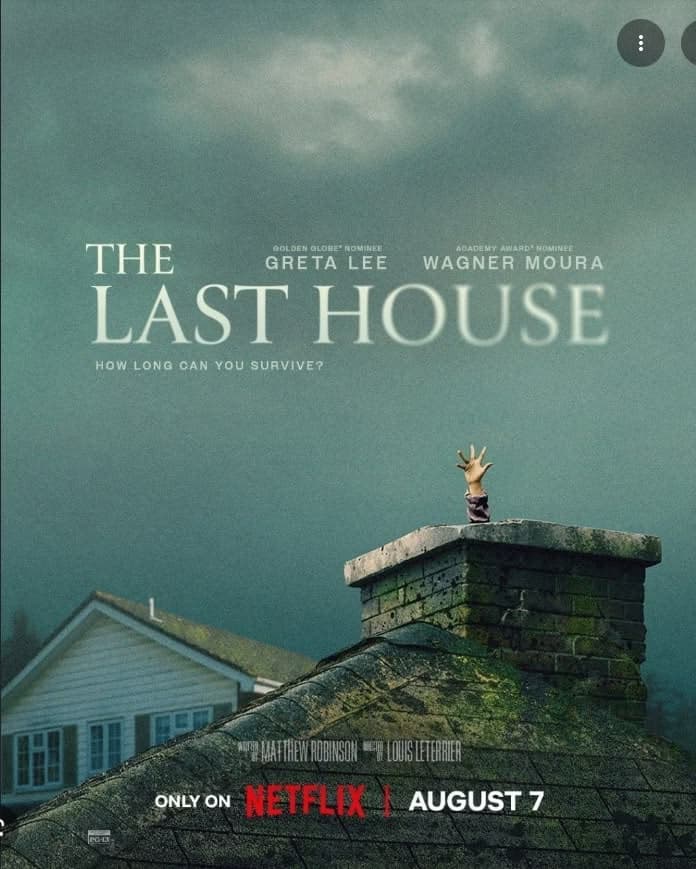
Great E. Okpaloafe
19 days ago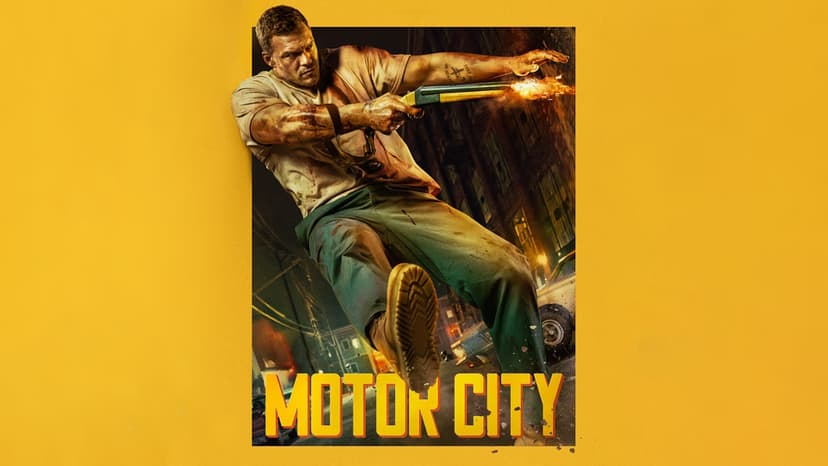
Okoh Raymond
19 days ago
Okoh Raymond
19 days ago